Cruelty to farm animals or cruelty to human beings?

The Iowa State Committees on Agriculture have proposed making it illegal to videotape or photograph cruelty to farm animals. The vote is pending in the full state senate and house.

How is it possible that politicians who have been elected by “human beings” to protect them have sold out to the “agriculture” lobbies to such an extent? To me, this goes beyond cruelty to farm animals. It is cruelty to human beings are supposed to consume this “meat.”

Where does it end?

Posted in Uncategorized | Leave a comment

“Navigating Treacherous Waters: Prescription Drug Marketing in Social Media,”

On Tuesday March 8th, Mary Nell Cummings, former assistant general counsel for GlaxoSmithKline, gave a speech at the S.I. Newhouse School of Public Communications.  GlaxoSmithKline is a global pharmaceutical, vaccine, and consumer healthcare company.  During her speech, Ms. Cummings introduced the struggle that many pharmaceutical companies face when attempting to advertise on new social means of communications such as Twitter, Facebook, and online blogging.

Ms. Cummings speech was very insightful and brought up many ethical questions of how far pharmaceutical companies can go to advertise their product.  She began by showing a commercial for a popular anti-depressant and questioned if it would be ethically sound to promote this product on social media sites such as Facebook and Twitter.  This brings up a very interesting debate.  There is no doubt that sites such as Facebook and Twitter are important upcoming means of advertising; however, is it inappropriate to promote an anti-depressant while someone is reading about what their friend did the past weekend.  Ms. Cummings presented the outcomes of recent legal debates that ban certain advertising on these social mediums.

Later in her speech, Ms. Cumming went on to discuss the problems with off-label marketing.  Off-Label is when a doctor proscribes a medication for unapproved indications.  For example, Ms. Cummings established how the anti-depressant, Ambilify, has benefits for Alzheimer patients, although it is not clinically proven.  Ms. Cummings speech went into the laws covering the marketing of this practice.  It is illegal for companies to promote usage of their product for certain off-label uses. Even further, it is illegal if a representative of a pharmaceutical company notices a post from an anonymous person about an off-label usage and does not attempt to remove it.   This concept can be very-controversial in a free-speech society.  This also puts a lot of legal pressure on pharmaceutical companies to be on close watch of the content on their blogs and other social feeds.

Ms. Cummings speech was very informative and insightful.  It showed the complexity of advertising when people’s lives are at stake.    In my opinion, I believe that when it comes to advertising for pharmaceuticals, companies should have to abide by strict rules.  I feel that trained doctors have a higher influence on pharmaceuticals than the media.  For example, if I were to choose a certain anti-depressant, the fact that it was advertised on Facebook would not influence my decision, but rather I would be influenced by the advice I received from my doctor.  These laws do make marketing these products on popular media sites more difficult; however, they are intended to keep people safe.

For more on Marketing of Pharma Industry:

[youtube]http://www.youtube.com/watch?v=KHHC5AYAUVI[/youtube]

Posted in Uncategorized | Tagged , , | Leave a comment

Eric Schlosser: Fast Food Nation

On Tuesday, March 1, 2011, award-winning investigative journalist Eric Schlosser spoke to the large crowd of people jammed into Hendricks Chapel about his best-selling work “Fast Food Nation.” Despite his initial failings, his book remained on the New York Times’ bestseller list for two years and, to date, has been translated into twenty different languages. Schlosser organized his speech by first speaking about the issues of environmentalism and the sustainable food system, continuing on to explain what fast food is doing to America as a nation, and concluding by offering advice as to what we should do to initiate change.
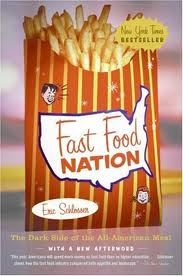
According to Schlosser, environmentalism and the fast food system concurrently boomed approximately 40 years ago. The environmentalist movement was spurred by Rachel Carson’s work Silent Spring, which brought an acute aware of insecticides, in the 1960s. Around the same time, the McDonald’s brothers created the ingenious idea of applying the basic principles of the factory system to the workings of a restaurant system. Traveling salesman Ray Crock founded the McDonald’s corporation based on the principles of uniformity, conformity, cheapness, and ‘everything the same.’ Buying out the McDonald’s business, he managed to start a trend in American society that valued and applied such ideals. Switching into the use of frozen, processed foods, the methods of food production in the fast food industry became increasingly unhealthy. Today, the industry has changed how livestock are processed and raised. The most recent technological innovation in livestock is cloning, which suggests a unique symbolism of the fast food mentality with goals of controlling, dominating, and conquering nature.

The fast food industry has had numerous negative effects on the public. For one, it has created a new kind of service sector that consists of low wages, high turnover rates, no benefits, no training, and large pay cuts. This new sector has even been dubbed with an official name: the McJob. In addition, there has been a large rise in air-borne illnesses and outbreaks of food poisoning nationwide. Moreover, the obesity rate among Americans, particularly children, has risen dramatically. This fact is accompanied by the sad reality that children who are obese by the age of 13 have overwhelming odds of remaining obese for the rest of their lifetimes. Finally, perhaps the most frightening effect is the new strain of insects described as antibiotic-resistant superbugs. 70-90 thousand Americans die each year from diseases caught from these creatures. Clearly, the issue of fast food has manifested itself in many ways that were surely unforeseen forty years ago.

I have not personally read Eric Schlosser’s book, but from the hour-long presentation, I now have a clear understanding of all that it is about. I attended the lecture because I am very conscious about food and its negative or positive health benefits, and it was a very rewarding experience. Schlosser concluded his lecture by offering ways in which the American people can contribute to a healthier society. He suggested that we, as a society, follow the example of the British who founded the modern organic movement about 60 years ago. He also stressed that there is not enough emphasis on social justice, using as an example the 15-20 thousand farm workers suffering acute poisoning from chemicals each year. He claims that it is poor and ordinary working people who need this change the most, and the biggest obstacle to achieving the desire goal is apathy. If society rid itself of apathy and became conscious of the struggles of even the poorest people in the country, it would be on the correct path to change. Schlosser concluded with the following quote by a Buddhist monk: “Once there is seeing, there must be acting. Otherwise, what’s the point of seeing?” In my opinion, that is enough said!


Posted in Uncategorized | Leave a comment

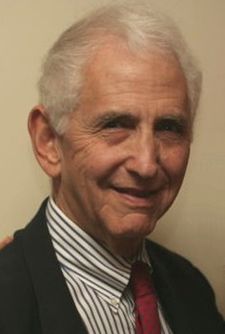
From the Pentagon Papers to Wikileaks: A Conversation with Daniel Ellsberg

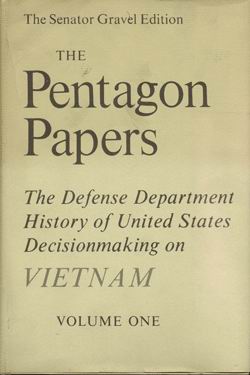
Daniel Ellsberg came into the spotlight in 1971 when he leaked the Pentagon Papers to the New York Times. The Pentagon Papers were 40,000 pages worth of documents of classified information pertaining to the Vietnam War. The information in the Papers dated from 1945 to 1967. Ellsberg gained access to the Papers while he was a military strategist in the Pentagon. The release of the Pentagon Papers brought to light issues of the freedom of speech and the transparency of governments.

When the New York Times set out to publish the information in the Papers, President Nixon ordered an injunction brought against the paper. The Times fought the injunction all the way up to the Supreme Court where it was overturned.  At the same time, the Washington Post moved to print material despite an attempt by the Assistant Attorney General to prevent the publication.

Ellsberg himself also faced legal troubles as a result of the Pentagon Papers. Facing a charge of treason and up to 115 years in prison, Ellsberg showed no fear. Deep down he knew that what he had done had not “provided aid and comfort for the enemy”. The only people he provided aid and comfort for were the misinformed Americans.

Throughout the conversation, Ellsberg brought up Bradley Manning and Julian Assange. Manning is a former U.S. Army soldier who leaked cables about the War in Iraq to Wikileaks. Many words have been used to describe these types of men- journalist, whistleblower, and traitor, to name a few. In my opinion, they are patriots. True that what Ellsberg did was patriotic as an American, but I am thinking on a more global scale. These men are patriots for the human race who has been led to ignorance by the deceit of the untrustworthy governments. I am scared that the cables leaked to Wikileaks and other sources are only the tip of the iceberg.

Posted in Uncategorized | Tagged , | Leave a comment

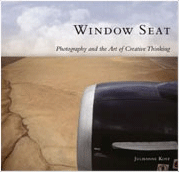
SPEECH: Window Seat: The Art of Digital Photography SPEAKER: Julianne Kost

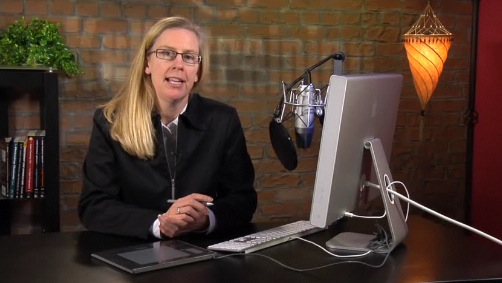
Standing in front of Watson Auditorium was a thin woman, nicely dressed in all black, with black cowboy boots, complimented by her long blonde hair. Being a student among many photoshop/lightworks savy adults, I was nervous for the lecture ahead. Instead though, this lecture turned out to be very interesting and beneficial for my Newhouse career.

Kost began by her lecture by speaking about her mother and father. Her father was a German engineer and her mother was an artist. Together, her parents created a perfect combination of a human with the knowledge of tools (dad) and creativity (mom). I was intrigued after learning that Kost had really gone to school for Psychology before coincidently getting a job at Adobe in 1992. After learning her background information, Kost proceeded to show us the blunt of the lecture, her magnificent work.

Kost focused much of her lecture, on showing the audience a few of her 8,000 total pictures she had taken from a passenger seat on a commercial flight, a tactic used for her in order to alleviate the fear of flying. I found the pictures to be absolutely magnificent and envied Kost for her creativity. Her photos included shots taken from Los Angles to San Jose, Tampa to Denver, and even San Francisco to Tokyo.

After taking the pictures, I wondered what Kost would do with all 8,000 photographs. The answer to my question was reveled after seeing Kost make a composite photograph of numerous photographs to produce one end picture. She opened Photoshop and Lightroom, showing the audience useful tools and tricks used to create composite photographs.

I was inspired and enlightened after seeing the “Window Seat: The Art of Digital Photography.” I loved to see a successful woman pursuing a career which she loved in something she was both skilled and compassionate about. Kost inspired me to be more creative in Photoshop and Lightroom.

Below is a link to one of Kost’s tutorials!

Kost’s Video Tutorial

Posted in Uncategorized | Leave a comment